

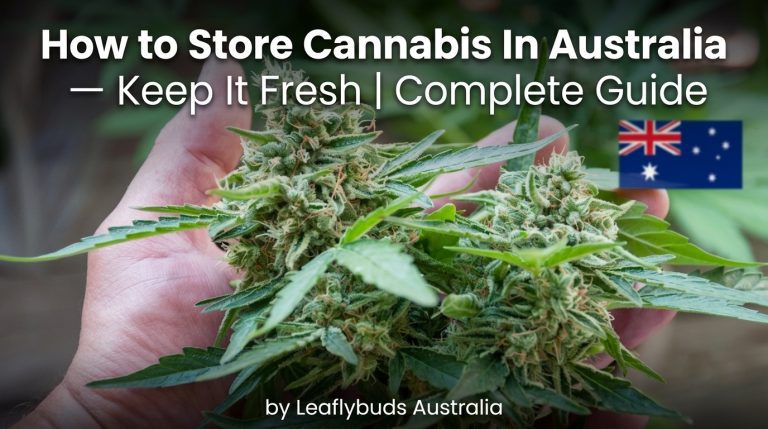
How to Store Cannabis in Australia — Keep It Fresh
Proper cannabis storage is one of the most overlooked aspects of getting the best from your purchase — and Australia's climate makes it matter more than in most countries. No matter how premium the strain, poor storage can destroy potency, flavour, and terpene complexity within days. This guide covers exactly how to preserve your cannabis for maximum freshness.
Why Proper Cannabis Storage Matters
Cannabis quality degrades through four primary environmental factors:
Light (UV radiation) — the single fastest degrader of THC. UV light breaks down cannabinoids and terpenes at the molecular level, and Australia's UV index is among the highest in the world year-round.
Heat — accelerates the decarboxylation of THCA into THC and further into CBN (a mildly psychoactive degradation product), reducing overall potency. This is a genuinely bigger issue in Australia's warmer states than in cooler climates.
Oxygen — oxidation degrades cannabinoids and terpenes over time. Too much air exposure causes drying and flavour loss.
Humidity — too much moisture causes mould (a real risk during the wet season in tropical Queensland and the NT); too little causes excessive drying, harsh smoke, and terpene loss (more common in drier inland regions).
The perfect storage solution controls all four factors simultaneously.
The Four Rules of Cannabis Storage
| Factor | Ideal Condition | What Goes Wrong if Ignored |
|---|---|---|
| Light | Complete darkness | THC and terpene degradation within days |
| Temperature | Below 25°C (ideally 15-21°C) | Terpene evaporation, mould risk above 25°C |
| Humidity (RH) | 55-65% relative humidity | Mould above 65%, brittle/harsh below 55% |
| Oxygen | Minimised — airtight seal | Oxidation, drying, flavour loss |
Best Containers for Storing Cannabis
1. Airtight Glass Jar — The Gold Standard
A mason jar, Kilner jar, or any wide-mouth glass jar with an airtight lid is the single best option for most cannabis users. Glass is non-reactive — does not leach chemicals or impart flavour — non-static (unlike plastic, it does not strip trichomes from the bud), airtight when sealed properly, easy to clean and reuse, and inexpensive and widely available. Use an opaque jar or store a clear jar inside a dark cupboard or drawer.
2. UV-Resistant Glass Jars
Premium UV-blocking glass jars (Miron glass / violet glass) offer an extra layer of protection by filtering out the most damaging UV and visible light frequencies. Given Australia's high UV index, this is a genuinely worthwhile upgrade for anyone storing cannabis anywhere that gets natural light exposure, even briefly.
3. Airtight Metal Tins
Metal containers with airtight lids are a solid second choice — especially for travel. Avoid tins that are not airtight, as they do not provide adequate oxygen control.
4. Vacuum-Sealed Bags or Containers
For long-term storage (3+ months), vacuum sealing removes nearly all oxygen and significantly slows degradation. Vacuum-sealed storage in a cool, dark location is the best method for preserving cannabis over extended periods without freezing.
UV-blocking violet glass jars
Airtight metal tins
Vacuum-sealed bags for long-term storage
Clear plastic containers (no UV protection)
Original paper packaging (no humidity control)
Small medicine bottles (too little airspace control)
Humidity Control — The Critical Factor
Humidity is the most nuanced storage variable and the most commonly mismanaged. The ideal relative humidity (RH) range for storing cannabis flower is 55-65%.
What Happens Outside This Range
| Humidity Level | Effect on Cannabis |
|---|---|
| Below 50% RH | Excessive drying — terpenes evaporate rapidly, harsh acrid smoke, brittle bud that crumbles to powder. More common in drier inland Australian regions. |
| 50-55% RH | Slightly dry — acceptable short term but will degrade over weeks |
| 55-65% RH | ✅ Ideal range — fresh, aromatic, properly cured |
| 65-75% RH | Risk zone — moisture building, potential for mould spores to activate. More common in tropical Queensland and NT during wet season. |
| Above 75% RH | High mould risk — do not consume mouldy cannabis |
How to Control Humidity — Boveda & Integra Packs
The easiest solution is a two-way humidity control pack. The most widely used brands are Boveda packs — industry standard, available in 58% and 62% RH versions. Place one small pack in your glass jar and it will both absorb and release moisture to maintain the target RH. Integra Boost packs offer similar function, with an indicator card that changes colour when the pack needs replacing. Both are inexpensive and available from tobacco accessory retailers and online. Replace every 2-4 months depending on how often the jar is opened — more frequently in Australia's more extreme climate zones.
Temperature — Where to Store Your Cannabis in Australia
The ideal temperature for cannabis storage is between 15°C and 21°C. Warmer temperatures accelerate terpene evaporation and, above 25°C, create conditions favourable for mould growth. This is a genuinely bigger challenge in Australia than in cooler climates — Queensland, the Northern Territory, and inland areas regularly exceed 30-40°C in summer, and even southern states have hot spells that can turn an unsuitable storage spot into a real problem within hours.
Bedroom drawer or wardrobe shelf
Dedicated lockable stash box in a cool room
Interior cupboard away from any external wall
Bathroom — humidity too variable
Near a stove, heater, or hot water system
Car glovebox — genuinely dangerous in Australian summer, can exceed 60°C+
Should You Keep Cannabis in the Fridge or Freezer?
Fridge — Not Recommended
Refrigerators maintain temperatures around 3-5°C and are subject to significant daily humidity fluctuations every time the door is opened. These moisture cycles can promote mould and cause condensation on the bud. The fridge is not an ideal cannabis storage environment for most users — even though the temptation is understandable in a hot Australian climate.
Freezer — Use with Caution
At freezing temperatures, trichomes (the resin glands that contain THC and terpenes) become extremely brittle. Any handling of frozen cannabis causes trichomes to break off — this is actually the principle behind making hash and live resin extraction. For regular use, freezing is counterproductive. For long-term storage of large quantities (6+ months), vacuum-sealed freezer storage by experienced users is viable — but defrost slowly and handle gently.
How Long Does Cannabis Stay Fresh?
| Storage Method | Estimated Shelf Life | THC Retention |
|---|---|---|
| Airtight glass jar, correct humidity, dark location | 6-12 months | Excellent |
| Vacuum sealed, cool dark storage | 12-24 months | Very good |
| Plastic bag, ambient conditions | 2-4 weeks | Poor — rapid degradation |
| Unsealed, open air (e.g. hot Australian summer) | Hours to a few days | Very poor |
Storing Different Cannabis Products
Pre-Rolls
Keep in the sealed tube until ready to use. Store upright in a cool, dark place. Consume within 1-2 weeks of opening for best flavour. Do not freeze — rolling paper becomes brittle. For more, see our Cannabis Pre-Rolls Australia guide.
THC Vapes
Store upright in a cool, dark location. Avoid extremes of heat — oil in vape cartridges can thin and leak at high temperatures, a real risk left in a hot car in Australian summer. Do not refrigerate. For more, see our Cannabis Oil Australia guide.
Edibles
Follow food storage guidelines specific to the product type. Most THC edibles (gummies, chocolates) should be stored in a cool, dark location — some require refrigeration, particularly in warmer states. Check the product packaging. See our Cannabis Edibles Australia Dosage Guide for more detail.
Concentrates (Wax, Shatter, Resin)
Store in silicone or glass non-stick containers in a cool, dark environment. Short-term (days-weeks): room temperature in an airtight container. Long-term: refrigerator in a sealed container works well for concentrates (unlike flower, moisture fluctuation is less of an issue with sealed concentrate containers) — a genuinely useful option in Australia's warmer states.
How to Revive Dried-Out Cannabis
If your cannabis has dried out — a common issue in Australia's drier regions or after a hot spell — all is not lost. Adding a humidity pack (or a small, fresh orange peel — replace after 24 hours to prevent mould) to the sealed jar will allow moisture to slowly re-integrate into the bud. This process takes 24-72 hours and can restore some flexibility and aroma — though lost terpenes cannot be fully recovered.
How to Check if Cannabis Has Gone Bad
Mould — visible white, grey, or green fuzzy growth. Do not consume mouldy cannabis.
Musty or damp smell — indicates moisture damage.
Flat, hay-like aroma — indicates significant terpene loss from age or improper storage.
Crumbles to dust on touch — over-dried, likely past its prime, a common outcome of poor storage in Australia's drier or hotter conditions.
No visible trichomes — significant potency loss has occurred.
Browse All Leaflybuds Products
Five categories, all independently lab-tested, all available for same-day dispatch Monday–Friday before 2pm.
Ready to Order Premium THC Flower?
Lab-tested Cali genetics, same-day dispatch before 2pm, Australia Post Express Tracked. $150 AUD minimum order.
Shop THC Flower Australia →